
In Their Own Words
Dungeons and Dragons Orcs and the forgotten truth

For years now I’ve watched people opine on Orcs, Orc aesthetics, and whether or not Orcs are a matter of ‘biological essentialism’ and ‘othering’. That is, whether or not Orcs are as a species predetermined to be evil and whether or not this is proof of an intrinsic racism in fantasy fiction and role-playing. However, there is one group that has not been asked: the Orcs themselves.
Of course, Orcs are fictional and can’t speak for themselves. Most people when discussing this are quick to jump to the eminent professor Tolkien and his lore for Orcs as though it were the definitive Orc lore. From there the discourse then goes either “Orcs are evil by default and it is good, and Christian, to kill an Orc,” or “Orcs are Biologically Essentialist and racist and you should feel bad because Orcs are insert preferred ethnicity here.”
These are the same people who often take various sources of Dungeons and Dragons lore and declare it an unvarnished absolute truth when it suits them. There are just as many people who claim the lore doesn’t exist, because D&D is just dungeon crawling and there are a mountain of Old School gamers to tell you so, but that doesn’t matter because who cares about facts. This is about winning fights on the internet!
Yet again, we never see anyone talking about what the Orcs say of themselves, as though WarCraft invented complexity in Orcs.
Well let’s see about that, shall we?
In the beginning all the gods met and drew lots for the parts of the world in which their representative races would dwell. The human gods drew the lot that allowed humans to dwell where they pleased, in any environment. The elven gods drew the green forests, the dwarven deities drew the high mountains, the gnomish gods the rocky, sunlit hills, and the halfling gods picked the lot that gave them the the fields and meadows. Then the assembled gods turned to the orcish gods and laughed loud and long. “All the lots are taken!” they said tauntingly. “Where will your people dwell, One-Eye? There is no place left!”
There was silence upon the world then, as Gruumsh One-Eye lifted his great iron spear and stretched it over the world. The shaft blotted the sun over a great part of the lands as he spoke: “No! You lie! You have rigged the drawing of the lots, hoping to cheat me and my followers. But One-Eye never sleeps; One-Eye sees all. There is a place for orcs to dwell . . . here!” he bellowed, and his spear pierced the mountains, opening mighty rifts and chasms. “And here!” and the spearhead split the hills and made them shake and covered them in dust. “And here!” and the black spear gouged the meadows, and made them bare.
“There!” roared He-Who-Watches triumphantly, and his voice carried to the ends of the world. “There is where the orcs shall dwell! There they will survive, and multiply, and grow stronger, and a day will come when they cover the world, and they shall slay all of your collected peoples! Orcs shall inherit the world you sought to cheat me of!”
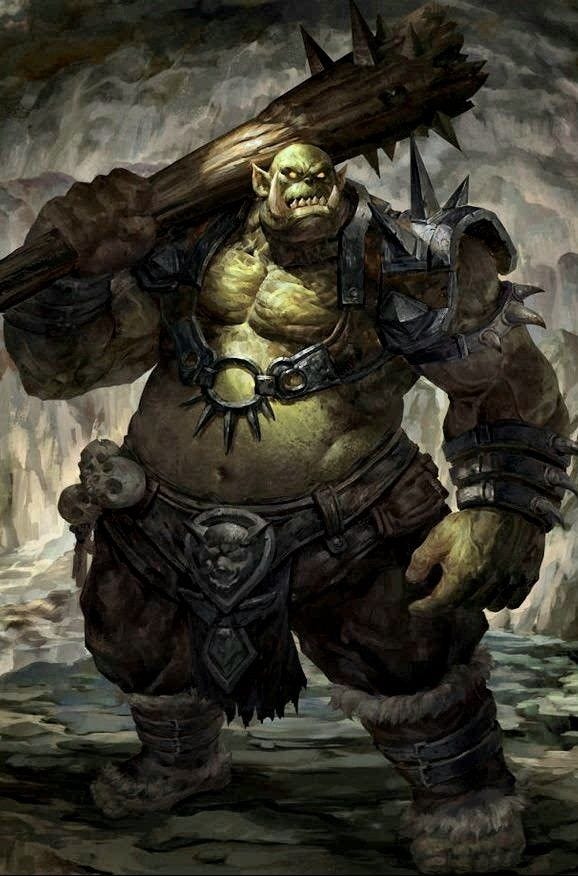
This creation myth, be it for Mystara, Forgotten Realms, or Greyhawk, appears in the Unearthed Arcana and was originally printed in Dragon Magazine #58-63 as an adjunct to Legends and Lore which was a reprint of Deities and Demigods. Most people would immediately jump to the Non-Human deities part to read up on Gruumsh and his stats, but lets idle a moment and consider the following from page 10 of Deities and Demigods under the header mortals and immortality:
AD&D assumes that the anima, that force which gives life and distinct existence to thinking beings, is one of two sorts: sou/ or spirit. Humans, dwarves, halflings, gnomes, and half-elves (those beings which can have a raise dead or resurrection spell cast upon them) all have souls; all other beings that worship deities have spirits. This latter group includes (but is not limited to) elves, orcs, half-orcs, and the other creatures specifically mentioned in the NONHUMANS’ DEITIES section of this work. The DM may decide on a case-by-case basis whether other creatures have spirits and
worship deities; the only parameter is that monsters with spirits must have at least an intelligence rating of Low. Please note that the following system is only a suggested one. Individual Dungeon Masters should use a different system if they find this one unsuitable.
When a being from the Prime Material Plane dies, its soul or spirit goes to one of the Outer Planes (See THE KNOWN PLANES OF EXISTENCE section.) Selecting which plane the soul or spirit goes to is the province of the DM, based upon the alignment behavior of the creature during its mortal life. If a human cleric died professing to be lawful good, he or she might expect to go to one of the Seven Heavens. The DM might judge some of the cleric’s acts as more neutral than lawful, and decide that a more appropriate plane would be Elysium. If a being has been faithful to the teachings and tenets of its deity, however, it is likely that the soul or spirit will pass into the plane where the deity resides. Moreover, the soul or spirit will go to that part of the plane most strongly influenced by that deity; for each plane is infinite, and most planes have more than one deity residing there (Olympus, Asgard, etc.).
Another difference between souls and spirits lies in what happens to them when they arrive at their destination. For souls, it is the beginning of eternity; it is on this plane that the soul will remain forever, enjoying the benefits or suffering the torments thereof. Spirits, on the other hand, may be but temporary residents of the plane. Their rewards and punishments are less than that received by souls. At some time in the future, at the will of the deity, the spirit can be returned to the Prime Material Plane — reincarnated. The new creature will not have any sort of overt memories of its former life, nor will its new form necessarily be the same as its old. If an elf becomes evil during his or her life, his or her spirit would go to one of the evil planes at death. The ruler of that plane might, a century later, decide to send the being back as a Drow, for example; this Drow would have the same sort of good-evil choices during life as the elf had (albeit from a different viewpoint), and conceivably could go to yet another plane upon death if he or she did not remain evil and loyal to the master of that place. The amount of time that a spirit must spend in a plane before returning to the Prime Material Plane is extremely variable. It could range from as little as ten years to a millennium or more — time is of no import to a deity.
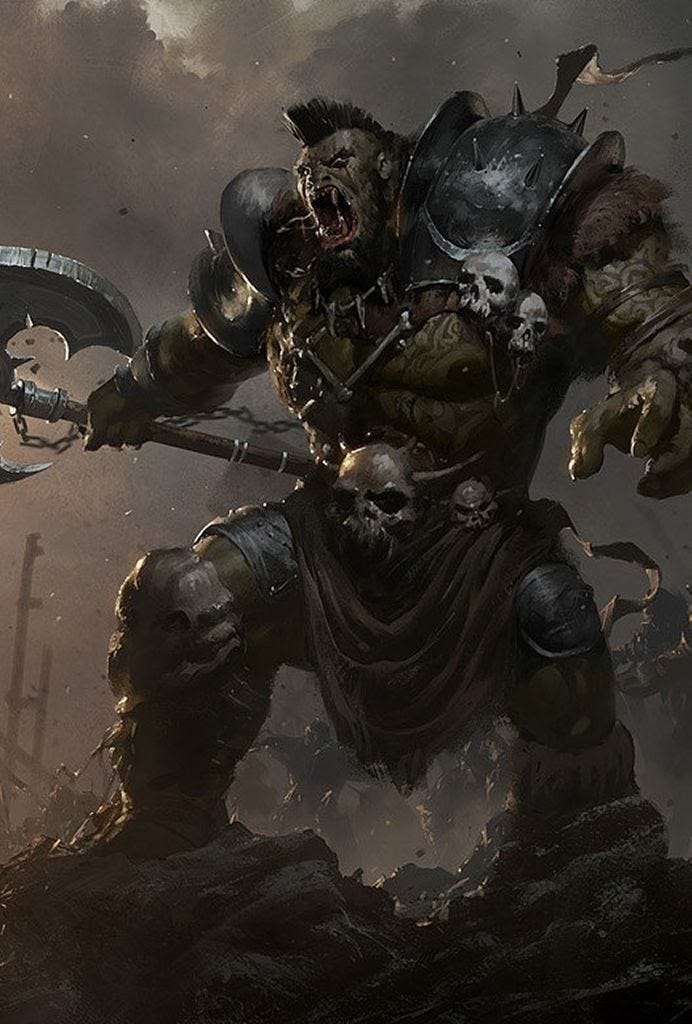
What this material, which is not particularly contradicted by later lore, indicates are several things. One, the Orcs created by their ancestral founder god are filled with a drive to conquer and dominate in a quest to claim for themselves a homeland which they feel they were denied. Two, as spirits a young Orc is in fact the reincarnation of perhaps hundreds or thousands of generations of Orcs because they are not people as humans know it, but manifest extensions of their creator’s will. But, most importantly,
If an elf becomes evil during his or her life, his or her spirit would go to one of the evil planes at death. The ruler of that plane might, a century later, decide to send the being back as a Drow, for example; this Drow would have the same sort of good-evil choices during life as the elf had (albeit from a different viewpoint), and conceivably could go to yet another plane upon death if he or she did not remain evil and loyal to the master of that place.
This tells us that while the origin and fate of Orcs are fixed, their decision making is subject to free will. They are born, reared, and shaped by both their culture and their experiences. That culture, outlined above, is defined by a drive to claim, conquer, and challenge oneself against enemies for the glory of their gods. That means that good and evil are not a biological imperative, but an environmental decision, and while Orcs - at least as far as D&D is concerned - are generally evil, there is nothing saying you can’t have good Orcs in your setting.
The whole debate, on both angles, falls apart and becomes needless sophistry once you go to original sources. Yet again, as I have said multiple times, go to first sources and judge for yourself. Don’t take for granted what people tell you. Are Orcs “The Other?” No. “Are they Bio-essentialist?” No. They are spiritual creatures. “Are they evil by default?” No. They have the ability to decide for themselves.
Orcs are Orcs, and you should use them as you see fit.